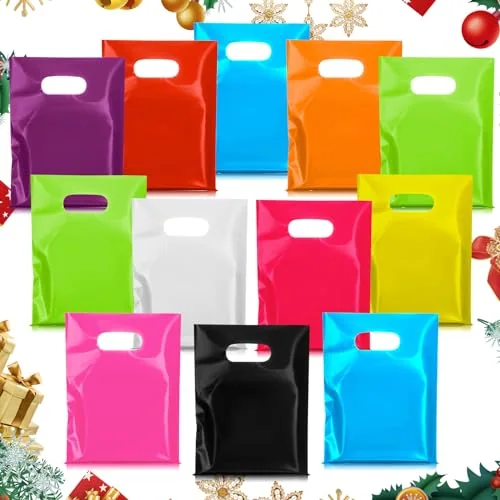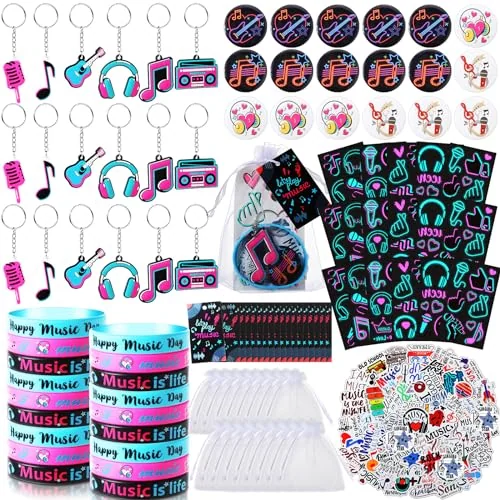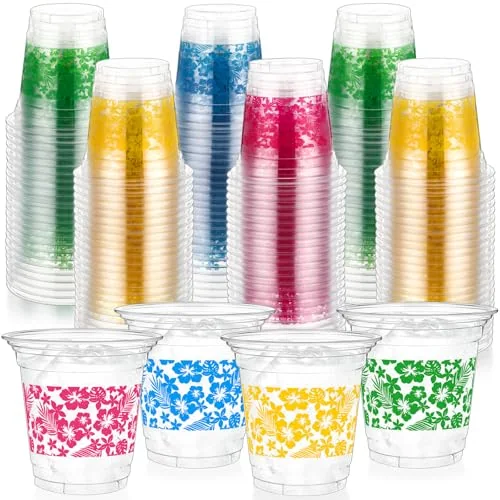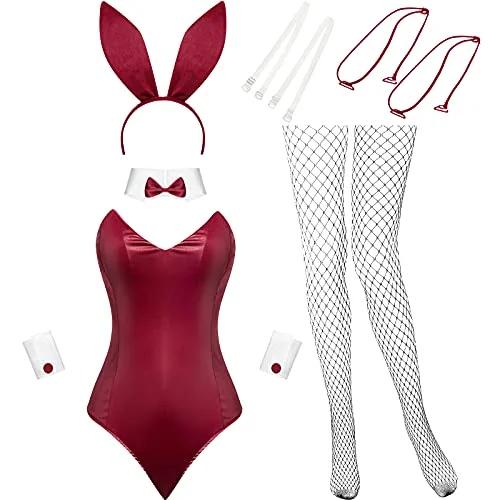
Bunny Costume Bodysuit Halloween Set
- In the pack
- 9 pcs
- Per piece
- $3.00
- Made of
- Satin
$26.994.2 out of 5 (1,356)
Guide
Two federal standards sit behind the dressing-up box: one about how fast a fabric burns, one about whether a piece fits inside a small cylinder. Both are simple, and both explain warnings people ignore.
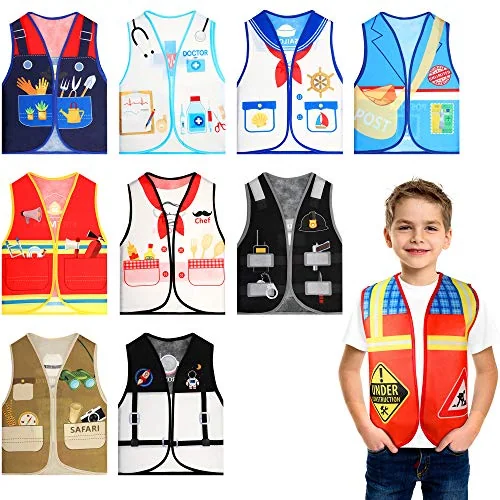
A party pack for a five-year-old and a party pack for a two-year-old are different objects even when they contain the same thing. Two federal standards draw the line between them, and neither one has anything to do with how the pack looks.
One asks how quickly the fabric burns. The other asks whether a piece of the thing fits inside a cylinder about the size of a toddler's windpipe. Once you know both, the age grade on a packet stops being a marketing number and starts being a statement about a test.
This guide covers both, then the practical checks worth doing at home. The counts come from the 25 dress-up lines and 79 party lines on our own shelf.
Part 1610 of Title 16 is the Standard for the Flammability of Clothing Textiles. It covers fabric intended for apparel, which takes in most of what a costume uses. Its own summary explains the method in one paragraph:
The Standard provides methods of testing the flammability of textiles from or intended to be used for apparel; establishes three classes of flammability; sets forth the requirements for classifying textiles; and prohibits the use of single or multi-layer textile fabrics that have burning characteristics that make them unsuitable for apparel.
U.S. Consumer Product Safety Commission, 16 CFR 1610.3, Summary of test method
The test itself is physical and almost crude. A technician holds a strip of fabric at forty-five degrees, touches a flame to it for one second, and times how long the flame takes to travel five inches up the strip. Raised-surface fabrics, the fleeces and the fur trims, get a brushing first, and the tester watches whether the base fabric catches.
That timing decides the class. Class 1 is the ordinary one:
Class 1 textiles exhibit normal flammability and are acceptable for use in clothing.
U.S. Consumer Product Safety Commission, 16 CFR 1610.4, Requirements for classifying textiles
For a plain-surface fabric that means a burn time of three and a half seconds or more. Class 2 exists only for raised-surface fabrics, sits between four and seven seconds, and is still permitted for clothing. Class 3 is the one that ends the conversation:
Class 3 textiles exhibit rapid and intense burning, are dangerously flammable and shall not be used for clothing.
U.S. Consumer Product Safety Commission, 16 CFR 1610.4, Requirements for classifying textiles
Shall not be used. This is not a labelling requirement or a warning requirement. Fabric in that class does not go into apparel at all.
Two things follow that people find counterintuitive. The first is that passing this standard is a floor rather than an achievement, so a costume advertised as meeting it is advertising the legal minimum. The second is that three and a half seconds is not very long, and a loose gauzy cape near a candle or a jack-o'-lantern is a real hazard even at Class 1.
Part 1501 is the small parts rule, and it is the one that decides what a child under three may be handed. Its scope is unusually explicit:
applies to all toys and other articles intended for use by children under 3 years (36 months) of age
U.S. Consumer Product Safety Commission, 16 CFR 1501.2, Scope
The requirement itself is one sentence and a drawing:
No toy or other children's article subject to § 1500.18(a)(9) and to this part 1501 shall be small enough to fit entirely within a cylinder with the dimensions shown in Figure 1, when tested in accordance with the procedure in paragraph (b) of this section.
U.S. Consumer Product Safety Commission, 16 CFR 1501.4, Size requirements and test procedure
The cylinder is a little over an inch across and a little over two inches deep at its deepest point, sloped so a long thin object can drop in. It approximates the throat of a child under three. The procedure is exactly what it sounds like:
Place the article, without compressing it, into the cylinder. If the article fits entirely within the cylinder, in any orientation, it fails to comply with the test procedure.
U.S. Consumer Product Safety Commission, 16 CFR 1501.4, Size requirements and test procedure
The second half of the procedure is the half that matters for party goods. An article that passes on its own then goes through the use and abuse tests, which pull, twist, drop and torque it, and anything that comes off goes into the cylinder one piece at a time. A bow that survives on the shelf and detaches on the first tug has failed.
People read three and up as a developmental recommendation. It is more often a small parts statement. The rule spells out how intent is judged:
the manufacturer's stated intent (such as on a label) if it is a reasonable one; the advertising, promotion, and marketing of the article; and whether the article is commonly recognized as being intended for children under 3
U.S. Consumer Product Safety Commission, 16 CFR 1501.2, Scope
If it is a reasonable one. A maker cannot put three and up on a stack of building blocks and escape the rule, because blocks are commonly recognised as a toy for younger children. But on a party favour with a small clip, the label is doing real work: it is saying this was not made for a mouth that still puts things in it.
The practical reading, for anybody buying a bulk pack for a mixed-age room, is this. An age grade on a pack of forty is a statement about the pack, and a room full of children is not a controlled environment. A nursery buying favours for a party with a two-year-old sibling in the room needs to check the pieces, not the packet.
None of these require equipment. The first one nearly does, and there is a substitute.
Our own shelf splits by the packet's stated audience rather than by our opinion of it. The table below counts the lines where the maker names children, and how those lines fall across pack sizes.
| Department | Lines named for children | Share of the department |
|---|---|---|
| Tops and Neckwear | 27 | 33% |
| Gloves and Sleeves | 25 | 28% |
| Socks, Legwear and Shoe Care | 24 | 24% |
| Party and Celebration | 24 | 30% |
| Hair and Head Covers | 22 | 19% |
| Sleep and Spa | 22 | 51% |
| Classroom and Workplace | 19 | 30% |
| Hats, Scarves and Face Covers | 15 | 18% |
| Costumes and Dress-Up | 15 | 60% |
| Bags, Home and Carry | 8 | 17% |
| Badge Reels and Lanyards | 1 | 1% |
Both rules in this guide are narrow on purpose. Between them they leave three things that send children to hospital, and none of the three is a small part or a flame.
Cords and ties around the neck. A cape fastened with a cord, a hood with a drawstring, a costume tie knotted at the throat. The hazard is a snag on playground equipment, a bannister or the back of a chair, and it is a strangulation risk rather than a choking one.
The safe design is a tie that pulls apart under load, or hook and loop, or nothing at all. When a costume arrives with a cord, cutting it out and replacing it with a light strip of hook and loop takes two minutes.
Masks and vision. A full face mask on a small child removes peripheral vision at exactly the age when a child runs first and looks second. Face paint is safer, a half mask is safer, and a mask pushed up on the forehead is safest of all. Nothing in the standards addresses this because it is not a property of the object.
Heat and static from cheap wigs. Synthetic hair is not covered by the clothing flammability standard in the way a garment is, and it is the single most flammable thing in a dressing-up box. Keep it away from candles, hobs and fire pits, and never dry one with a hairdryer.
The dressing-up corner of a nursery is not a party purchase. It is uniform, and it should be bought the way uniform is bought.
Sizing runs generous on purpose, because a group of four-year-olds spans a surprising range and a costume that fits half of them is a costume that gets fought over. Look for elastic or hook and loop rather than buttons and zips, both because they survive being pulled off in a hurry and because a three-year-old can manage them alone.
Washing is the real test. A helper vest in a busy room goes through the machine weekly, and by week eight the printed detail on a cheap one has cracked and the hook and loop has lost its grip. Printed fabric fades faster than dyed fabric, so a plain vest with a stitched badge outlasts a printed one at the same price.
Count for the room and then add two. Somebody will take one home in a bag, and something will be unavailable on the day you want to reorder.
The last piece is storage. Costumes live in a box, get sat on and come out creased. Anything that needs ironing will not get ironed, so knitted and crumpled-friendly fabrics beat crisp ones in a way that does not show in a photograph.
Costume and party packs are the clearest case for buying by the count, because the count is known in advance. A class list is a number. A guest list is a number. A pack of twenty-four for a room of twenty is the right pack, and a pack of six is four purchases and three deliveries.
The arithmetic is the same one this whole site is built on. Below is how the pack sizes divide across every department, with the lowest per-piece figure we currently reach in each band.
| Pack size | Pack lines | Lowest per piece |
|---|---|---|
| Singles and pairs (1 to 2) | 160 | $2.25 |
| Small packs (3 to 9) | 379 | $0.75 |
| Class packs (10 to 29) | 185 | $0.21 |
| Bulk packs (30 to 99) | 79 | $0.10 |
| Case packs (100 and up) | 54 | $0.010 |
Party goods sit heavily in the two largest bands, and that is what makes the per-piece figures there look so unlike the ones on a garment. A favour bag at four cents and a scarf at nine dollars are not competing for the same money, and the only thing they have in common is that you know how many you need before you order.
One honest note about the department. Party goods are made for one afternoon, and most of what is in a favour bag is in a bin by the weekend. We are not going to pretend otherwise on a page that sells them by the hundred.
What we can do is separate the two halves of the pack. The cups, napkins, swirls and bags are consumables, and they should be bought at the lowest sane per-piece figure. The costumes, capes and vests are not: a nursery washes those and uses them for a term or three, which puts them closer to workwear than to decoration. Buying the second group as though it were the first is the usual mistake, and it shows up in the seams after the fourth wash.
If a pack here is made to last, its page says what it is made of. If it is made for an afternoon, the page says that too, and the per-piece figure is doing most of the talking.
Everything above collapses into one pass through the box when it arrives. Do it on the kitchen table, before anything reaches a child.
Ten minutes, once, and the difference is that you know what is in the box rather than hoping.
Party goods are the one place where per-piece pricing turns straight into a budget, because the guest list is a fixed number.
Work it forwards. Twenty children, one favour bag each, and the bag holds four things. That is twenty bags and eighty small items. At four cents an item and eight cents a bag, the whole favour operation is five dollars, and it is the cheapest part of the afternoon. At twenty-five cents an item bought in packs of six, it is twenty-one dollars for exactly the same afternoon.
The difference is not quality. It is the pack size, and it is available in advance to anybody who divides before ordering.
The same sum runs the other way for anything durable. A costume at nine dollars used once is nine dollars. The same costume in a nursery dressing-up box for three terms is under a dollar a month, and at that point the seams matter and the price does not.
| Source | Published by | Read |
|---|---|---|
| 16 CFR 1610.3, Summary of test method | U.S. Consumer Product Safety Commission | 6 September 2026 |
| 16 CFR 1610.4, Requirements for classifying textiles | U.S. Consumer Product Safety Commission | 6 September 2026 |
| 16 CFR 1501.2, Scope | U.S. Consumer Product Safety Commission | 6 September 2026 |
| 16 CFR 1501.4, Size requirements and test procedure | U.S. Consumer Product Safety Commission | 6 September 2026 |