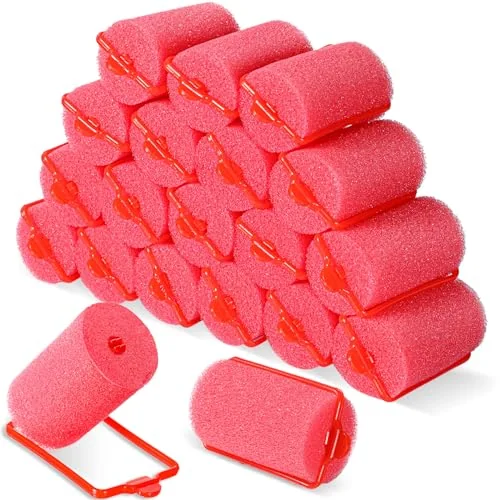
Red Sponge Hair Rollers For Women, 1.4 X 2.6 In
- In the pack
- 18 pcs
- Per piece
- $0.44
- Made of
- Plastic
$7.993.7 out of 5 (5,297)
Guide
One sentence of federal regulation decides what a kitchen, a ward and a production line have to put on a head. It is shorter and vaguer than most people expect, and the vagueness is the interesting part.
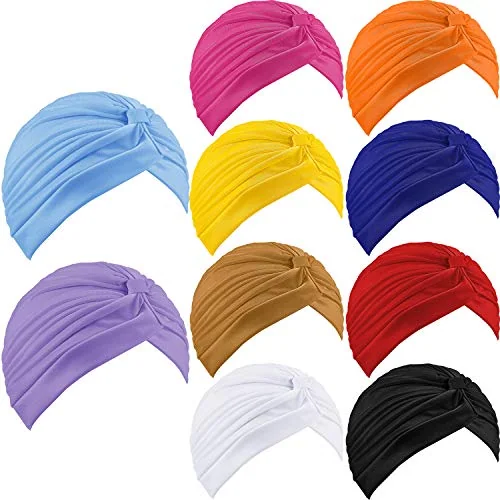
Somebody on your first day handed you a paper cap and told you it was the law. They were roughly right and precisely wrong. There is a federal rule, it does cover hair, and it is one clause long.
It is worth reading, because what it does not say shapes half the arguments people have about head covers at work. It does not name a colour. It does not name a material. It does not say bouffant rather than baseball cap, and it does not say disposable rather than washable. It asks for something to work, and it leaves the choosing to whoever runs the room.
This guide walks through the clause, then through the practical choices it leaves open. Every count in it comes from the 113 hair and head cover lines on our own shelf.
Food manufacturing in the United States runs under Part 117 of Title 21, the current good manufacturing practice rules. Section 117.10 is headed Personnel, and it opens by putting the duty on the business rather than on the person wearing the hat. Management must take reasonable measures and precautions to ensure the list that follows. Under the heading Cleanliness, the sixth item is the one everybody quotes:
Wearing, where appropriate, in an effective manner, hair nets, headbands, caps, beard covers, or other effective hair restraints.
U.S. Food and Drug Administration, 21 CFR 117.10, Personnel
Three phrases in that sentence do all the work, and none of them is the list of items.
Where appropriate means the rule does not apply everywhere in a building. Somebody in an office next to a plant is not covered by the same expectation as somebody standing over an open mixing bowl. The rule points at people who work in direct contact with food, food-contact surfaces and food-packaging materials.
In an effective manner is the phrase inspectors actually use. A net worn on the back of the head with a fringe hanging free is a net worn ineffectively. So is a beard cover pushed under the chin. The item is not the compliance. The wearing is.
Or other effective hair restraints is the escape clause that keeps the rule alive as products change. A surgical style tie-back cap, a fitted scrub cap, a snood over a beard, a wrap that covers braids: none of those are named, all of them qualify if they restrain hair.
Hair is item six of nine, and the neighbours matter to anyone buying supplies for a working room. The clause also asks for outer garments suitable to the operation, and for something people forget until an inspection:
Removing all unsecured jewelry and other objects that might fall into food, equipment, or containers, and removing hand jewelry that cannot be adequately sanitized during periods in which food is manipulated by hand.
U.S. Food and Drug Administration, 21 CFR 117.10, Personnel
That sentence is why a badge on a lanyard is a problem in a kitchen and a badge on a retractable reel clipped at the hip is not. Anything that swings over a bowl is an unsecured object. It is also why our badge department sells so many breakaway cords to catering firms: the cord is the part that is meant to fail.
Gloves get their own item, and the wording is about condition rather than about wearing them at all:
Maintaining gloves, if they are used in food handling, in an intact, clean, and sanitary condition.
U.S. Food and Drug Administration, 21 CFR 117.10, Personnel
If they are used. The rule does not require gloves in food handling. It requires that gloves, once you have chosen them, are not torn and not filthy. Every kitchen that argues about glove policy is arguing about its own policy, not about this rule.
Part 117 covers food. It says nothing about a hair salon, a nail bar, an operating theatre or a paint line, and people apply it to all four out of habit.
Salons and barbers answer to a state cosmetology board, and boards differ from one another on almost everything except sanitation of tools. Hospitals answer to their own infection control policy, which is usually stricter than any regulation and is written by the hospital. Manufacturing outside food answers to whatever the employer's hazard assessment says, and near moving machinery that assessment is normally about entanglement rather than contamination.
The practical result is that a bouffant cap bought for a bakery, a scrub cap bought for a clinic and a snood bought for a machine shop are the same object doing three jobs under three different sets of words. That is why our hair department mixes all three rather than splitting them.
Compliance fails at hour six, not at hour one. The head cover that gets pushed back or pulled off is the one that was uncomfortable, and an uncomfortable cover is an ineffective one no matter what the packet says.
Four things decide whether a cover survives a shift.
Material is the shortest way to guess at the first two. Here is what the makers on our shelf state, counted across the whole range rather than one department, because the same fabrics turn up in socks and sleeves for the same reasons.
| Material named by the maker | Pack lines |
|---|---|
| Polyester | 126 |
| Cotton | 106 |
| Plastic | 84 |
| Paper | 74 |
| Satin | 64 |
| Nylon | 59 |
| Metal | 41 |
| Knit | 41 |
| Fleece | 35 |
| Silk | 32 |
| Leather | 19 |
| Spandex | 19 |
| Silicone | 17 |
| Lace | 17 |
| Velvet | 9 |
| Mesh | 8 |
| Linen | 1 |
Nobody arrives with a ruler. What a food safety inspector does is watch people work for ten minutes, and hair comes up in three specific ways.
The first is the hairline. A cap that starts behind the front hairline leaves a fringe loose over the work surface, and that reads as a restraint worn ineffectively no matter how good the cap is. The fix is unglamorous: pull it forward until it sits on the forehead, and accept that it looks worse.
The second is the nape. Long hair tucked up under a cap works until somebody bends over a low shelf. If the hair can fall out when the head goes down, it is not restrained, and a snood or a tie-back is the answer rather than a bigger bouffant.
The third is facial hair. A beard cover is named in the clause, and the common failure is wearing it under the chin like a sling. It goes over the beard, ear to ear.
The other thing an inspector notices, and nobody expects, is the supply itself. A box of caps stored open on a shelf above a prep bench is a box of caps that has been collecting whatever the extractor missed. Keep them in the packet, in a cupboard, and take one out at the door.
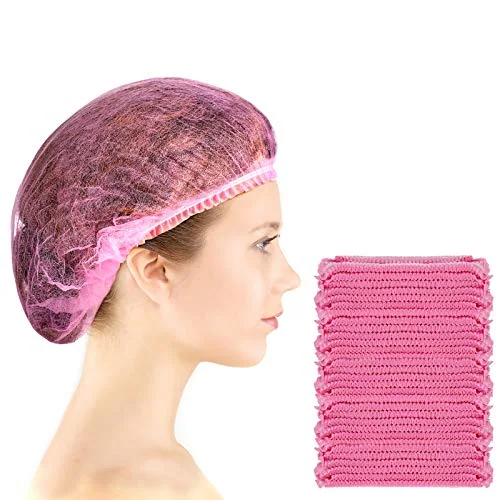
Head covers look interchangeable in a photograph and are not. These are the five we stock most of, and what each is genuinely for.
Two of those, the snood and the tie-back, are washable, and that changes the arithmetic completely. The next section is where it lands.
This is where buying for a room differs from buying for yourself, and where the per-piece figure earns its place on the page.
A disposable cover is one wear. A kitchen running two shifts of six people gets through twelve a day, sixty a week, and something near three thousand a year. At that rate the difference between eleven cents and four cents a piece is two hundred dollars, and it is invisible until you divide.
A washable cover is a different sum. Each person needs three: one on, one in the wash, one in the locker. A team of six needs eighteen, and then needs a top-up when elastic goes slack, which on daily washing happens somewhere between four and eight months.
Our pack sizes are grouped to match those two patterns. The bands below show how the whole shelf splits, with the cheapest per-piece figure we currently reach in each one.
| Pack size | Pack lines | Lowest per piece |
|---|---|---|
| Singles and pairs (1 to 2) | 160 | $2.25 |
| Small packs (3 to 9) | 379 | $0.75 |
| Class packs (10 to 29) | 185 | $0.21 |
| Bulk packs (30 to 99) | 79 | $0.10 |
| Case packs (100 and up) | 54 | $0.010 |
The pattern in that table holds across departments, and it is the reason we print a per-piece figure at all. Under thirty pieces you are paying for the convenience of a small box. Over a hundred you are paying for the thing itself, and the box stops mattering.
The clause names beard covers in the same breath as hair nets, and most suppliers treat them as an afterthought. In practice they are the item a kitchen runs out of first, because the people who need them need one every shift and the people who order supplies often do not.
Braids and locs are the second gap. A bouffant sized for loose shoulder-length hair will not close over a head of shoulder-length locs, and the usual result is that somebody wears two caps, badly. A snood with a pouch is the correct object. It is also the one that gets dropped from supply lists because whoever writes the list does not need one.
We do not have a clever answer to either problem beyond stocking both and saying so on the page. If a pack here says it is sized for long hair, that is the maker's own claim, and where the maker has not said, our page says nothing.
The per-piece figure on our pages answers one question: what does a piece cost. For anything washable it is the wrong question, and the right one takes ten seconds.
A disposable bouffant costs what it costs, once. A washable tie-back costs its price divided by the number of times you will wear it before it goes slack. Call that fifty washes for a cotton cap laundered hot, more if it goes in cool. A cap at four dollars over fifty wears is eight cents a wear, and that beats almost every disposable on the shelf.
The catch is the laundry, and the laundry is the part people forget to count. If the caps go through a commercial wash with the aprons, the marginal cost is close to nothing. If somebody takes them home, it is not free, it is just paid by somebody else.
Where disposables win outright is anywhere a cover is worn once by a person who will not come back: a visitor walking a production floor, a contractor in for a morning, a parent helping at a school kitchen for a day. Nobody launders a cap for a visitor.
Half of what sells in this department never goes near a workplace. Satin bonnets and wraps protect hair overnight, which is a hair-care purchase rather than a hygiene one. Shower caps keep a blow-dry alive for another day. Pre-tied head scarves are what people reach for during chemotherapy, when a wig is too warm and a bare head is too cold.
Those buyers want the opposite of what a kitchen wants. A kitchen wants an object it can throw away. A person going through treatment wants a seam that does not press, a fabric that does not itch on skin that has become sensitive, and a shape that stays put without gripping. Satin against the scalp does all three better than cotton does, and it is the one place where the shiny fabric is the practical choice rather than the decorative one.
We sell both out of one department because the objects overlap, and we try to keep the pages honest about which buyer each pack was made for.
The last practical piece is ordering rhythm, and it is the one that separates a supply cupboard that works from one that runs dry on a Friday.
Work out the burn rate first. Count the people who need a cover, multiply by shifts a week, multiply by four. Six people on five shifts is a hundred and twenty covers a month for a disposable operation, and one box of a hundred is therefore not a month, it is three weeks and an argument.
Then order to a rhythm rather than to a level. A quarterly order of four hundred beats a monthly order of a hundred and twenty on price and on nerves, and the only cost is a shelf. Covers do not perish, they do not go out of style, and the elastic on an unopened pack is fine a year later.
Keep the second shape as well as the first. Every room has at least one person whose hair does not fit the standard bouffant, and the moment that person has to improvise, the whole policy stops being a policy. A dozen snoods on the shelf costs less than one awkward conversation.
Last, put the box where the door is. A cover that lives on the far side of a room gets skipped. This is the least regulated advice in this guide and the one that changes compliance most.
| Source | Published by | Read |
|---|---|---|
| 21 CFR 117.10, Personnel | U.S. Food and Drug Administration | 6 September 2026 |